If you have ever taken a pre-workout and suddenly felt your face, neck, arms, or hands start tingling or itching, you are not imagining it. The sensation is commonly associated with beta-alanine, an ingredient frequently included in pre-workout formulas. Beta-alanine can cause a temporary sensation called paresthesia, which may feel like itching, prickling, or pins and needles.
Another ingredient, niacin, can cause flushing and warmth, although its effect is different from beta-alanine tingling. The important thing is knowing what is normal, how long the sensation can last, and when itching may point to something more serious. This guide explains why pre-workout can make you itch, what beta-alanine is doing, how to reduce the sensation, and what to consider when choosing a pre-workout formula.
The Pre-Workout Itch Has a Specific Name
The familiar pre-workout itch is commonly called paresthesia when it is caused by beta-alanine. It is a temporary sensory effect that can feel like tingling, prickling, itching, or pins and needles beneath the skin.
The sensation can be surprising, especially if you have never experienced it before. It may begin relatively soon after taking a supplement and can be noticeable around the face, neck, hands, or upper body.
According to the International Society of Sports Nutrition, paresthesia is the most commonly reported side effect of beta-alanine supplementation and is particularly associated with larger single doses of non-sustained-release beta-alanine.
That does not mean everyone who takes beta-alanine will experience the same sensation. The intensity can vary depending on the formulation, serving size, and individual sensitivity. Understanding the name helps, but the more useful question is what causes the sensation in the first place.
Beta-Alanine Is Usually the Main Reason
When people ask, “Why does pre-workout make me itch?” beta-alanine is often the first ingredient worth checking on the label.
Beta-alanine is an amino acid used in sports nutrition because the body uses it to produce carnosine in skeletal muscle. Carnosine contributes to the muscles’ ability to buffer hydrogen ions during intense exercise.
The tingling is a separate effect. Beta-alanine can stimulate sensory receptors associated with the skin, creating the temporary sensation that many people describe as a pre-workout itch.
A systematic risk assessment and meta-analysis published in Advances in Nutrition examined 101 human studies and 50 animal studies. The researchers found that paresthesia was the only reported side effect identified in their analysis of beta-alanine supplementation, with participants receiving beta-alanine more likely to report it than those receiving placebo.
That evidence helps put the sensation into perspective. Beta-alanine tingling is a recognized effect of supplementation, rather than something that necessarily means the product is damaging your skin.
What Happens to Your Nerves When Beta-Alanine Causes Tingling
The reason beta-alanine makes some people itch is more interesting than simply saying that it “activates the nerves”.
Researchers have identified a sensory pathway involving a receptor called MrgprD, which is expressed by a subset of sensory neurons.
In a study published in Molecular Pain, researchers found that beta-alanine activated MrgprD-related sensory neurons in mice. In human experiments, beta-alanine produced itching without the typical wheal and flare response associated with histamine, suggesting that the sensation uses a different pathway from ordinary histamine-mediated itching.
That distinction matters because it explains why beta-alanine tingling is not automatically an allergic reaction.
The sensation is essentially your nervous system responding to beta-alanine. It can be uncomfortable, but it is usually temporary.
Why Beta-Alanine Is Included in Pre-Workout
The itching is not the reason beta-alanine is included in a pre-workout. Its intended role is related to exercise performance.
Beta-alanine helps provide the raw material needed to increase muscle carnosine levels. During intense exercise, carnosine contributes to intracellular buffering, which may help muscles cope with the metabolic conditions associated with high-intensity effort.
A 2024 systematic review and meta-analysis examined 18 studies involving 331 trained young men. The researchers found an overall benefit of beta-alanine supplementation for maximal-intensity exercise, with stronger effects after four weeks of supplementation and during efforts lasting four to ten minutes.
That finding also explains an important misconception: the tingling is not the performance benefit.
Feeling a strong beta-alanine tingle does not prove that a pre-workout is working better. The performance-related effects of beta-alanine are associated with consistent supplementation and increased muscle carnosine, not with how intense the skin sensation feels.
Is the Pre-Workout Itch a Sign That Something Is Wrong?
Usually, temporary beta-alanine tingling is a known effect rather than a sign that something has gone wrong.
It can feel intense, particularly when someone takes a relatively large single dose. The sensation may be annoying, but it generally fades on its own.
The International Society of Sports Nutrition reports that beta-alanine-induced paresthesia typically lasts about 60 to 90 minutes and that dividing the daily dose can reduce its intensity.
Still, it is important not to dismiss every reaction to a pre-workout as beta-alanine tingling.
Hives, significant swelling, difficulty breathing, or other symptoms suggesting a serious allergic reaction are different from ordinary paresthesia. If those symptoms occur, stop using the product and seek appropriate medical attention.
The ingredient list also matters because pre-workouts often contain several active ingredients. What you experience may not necessarily come from beta-alanine alone.
How Long the Tingling Usually Lasts
One of the most common questions is, “How long does pre-workout itching last?”
For beta-alanine, the sensation is generally temporary. The duration can vary, but research from the International Society of Sports Nutrition places the typical duration of paresthesia at around 60 to 90 minutes.
The exact experience can differ from person to person. Some people notice the sensation strongly, while others barely notice it. The amount taken at one time and the type of formulation can also influence how pronounced it feels.
If you are new to beta-alanine, a strong sensation can be unexpected. It does not necessarily mean you have taken too much, but you should always follow the serving instructions for the specific product.
Niacin Can Cause a Different Kind of Skin Reaction
Beta-alanine is not the only ingredient that can create an unusual skin sensation after taking pre-workout.
Some formulas contain niacin, also known as vitamin B3. Higher amounts of niacin can cause what is commonly called a niacin flush, which may involve warmth, redness, and a flushed feeling.
This is different from beta-alanine paresthesia, even though the two sensations can be confused when they occur after taking the same supplement.
The distinction becomes particularly useful when reading a pre-workout label. If a product contains both beta-alanine and niacin, there may be more than one explanation for what you are feeling.
A practical approach is to look at the complete ingredient list instead of assuming that every sensation comes from caffeine or beta-alanine.
When Itching Could Mean Something More Serious
The classic beta-alanine tingle should not be confused with every type of itching that happens after taking a supplement.
Paresthesia typically feels like tingling, prickling, or a temporary pins-and-needles sensation. An allergic reaction can involve immune-related symptoms such as hives, swelling, or breathing difficulties.
The Boots Pharmacy Team specifically distinguishes beta-alanine-related paresthesia from allergic reactions and advises seeking medical advice if symptoms such as rash, swelling, or difficulty breathing occur.
This distinction is important because a person should not assume that a severe reaction is simply “the pre-workout itch.”
If you develop swelling of the lips, tongue, or throat, trouble breathing, widespread hives, or another potentially serious reaction after taking a supplement, seek urgent medical care.
Ways to Reduce Beta-Alanine Tingling
If you like the benefits of beta-alanine but dislike the sensation, there are ways to approach supplementation differently.
One option discussed in sports nutrition research is dividing the daily amount into smaller servings rather than taking a large amount at once. The ISSN position stand reports that smaller divided doses can reduce the intensity of beta-alanine paresthesia.
Sustained-release beta-alanine is another approach that has been studied for reducing the sensation.
It is also worth checking the amount of beta-alanine in your pre-workout. More is not automatically better, and following the manufacturer’s recommended serving is important.
If the sensation remains unpleasant, a beta-alanine-free pre-workout is another option. There is no reason to force yourself to tolerate a supplement that you simply do not enjoy using.
Can You Use Pre-Workout Without the Itch?
Yes. A pre-workout does not have to contain beta-alanine.
If you specifically want to avoid beta-alanine tingling, check the ingredient list before buying a product. This is particularly important because the front of a supplement container may highlight caffeine, energy, or other features without making every active ingredient immediately obvious.
When choosing a pre-workout, consider what you actually want from the formula. Some people prioritize moderate caffeine, while others are more interested in ingredients associated with endurance, hydration, or training performance.
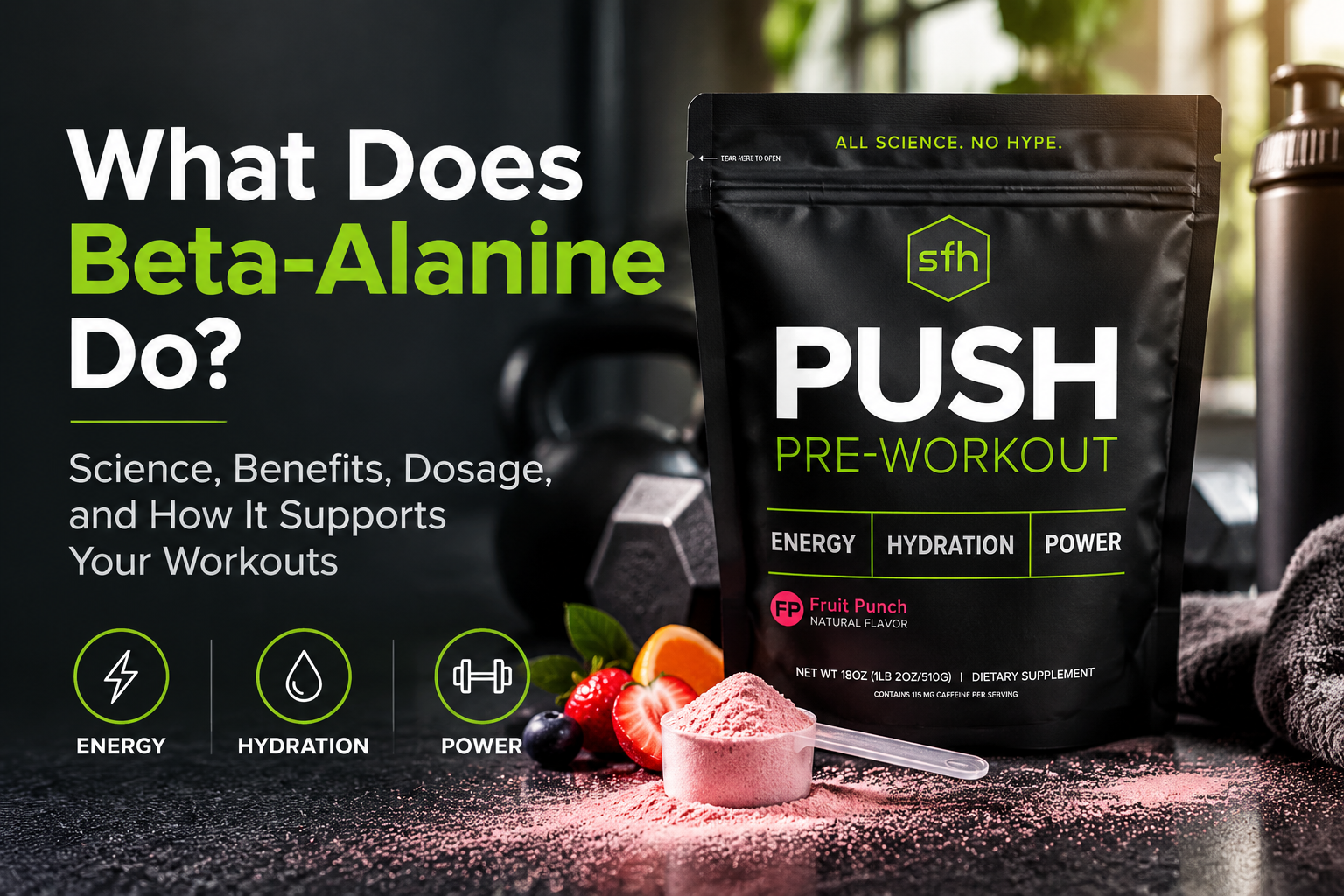
For someone who does want beta-alanine but prefers a moderate-stimulant formula, SFH Push offers 3 grams of beta-alanine alongside 115 mg of caffeine, 5 grams of L-citrulline, BCAAs, glycine, and electrolytes. Looking at those individual amounts makes it easier to understand the formula rather than judging a pre-workout simply by the sensation it produces.
The right choice ultimately depends on your training goals, ingredient preferences, and tolerance.
What to Look for When Choosing a Pre-Workout Formula
A good pre-workout should make sense as a complete formula rather than simply containing a long list of ingredients.
Look at the amounts provided, not just the names. Consider caffeine content if you are sensitive to stimulants, and check whether the formula contains beta-alanine if you want to avoid tingling.
It is also useful to understand why each ingredient is included. Beta-alanine has a different role from caffeine, while L-citrulline serves a different purpose from electrolytes.
That makes ingredient literacy more valuable than chasing the strongest possible pre-workout sensation.
For example, a formula containing moderate caffeine, beta-alanine, L-citrulline, BCAAs, glycine, and electrolytes can be evaluated by looking at how those components fit together and whether they match your own training needs. SFH Push takes that broader approach, combining its performance ingredients with electrolytes while avoiding artificial sweeteners, soy, gluten, and GMOs.
The key is to choose based on the formula and your needs, rather than assuming that stronger tingling means stronger results.
Frequently Asked Questions
Why does pre-workout make you itch?
Pre-workout often makes people itch or tingle because it contains beta-alanine. Beta-alanine can stimulate sensory nerve pathways in the skin, producing a temporary sensation called paresthesia.
Is beta-alanine tingling dangerous?
Temporary beta-alanine tingling is a known side effect of supplementation and is generally short-lived. However, severe symptoms such as swelling, hives, or difficulty breathing should not be dismissed as ordinary tingling.
How long do beta-alanine tingles last?
The International Society of Sports Nutrition reports that beta-alanine paresthesia generally lasts around 60 to 90 minutes, although individual experiences vary.
How can you reduce beta-alanine tingling?
Taking smaller divided doses can reduce the intensity of beta-alanine paresthesia. Sustained-release formulations may also reduce the sensation. Always follow the product’s directions.
Does beta-alanine tingling mean the pre-workout is working?
No. The tingling is a sensory side effect, not a reliable measure of performance benefit. Beta-alanine’s intended role is to increase muscle carnosine levels over time.
Why Does Pre-Workout Make You Itch?
The classic pre-workout itch is most commonly associated with beta-alanine. It happens because beta-alanine can activate sensory pathways that produce temporary tingling or itching, known as paresthesia. Although the sensation can be surprisingly strong, it is different from an allergic reaction and generally fades with time.
The important point is that the itch is not what makes beta-alanine useful. Its purpose in sports nutrition is to increase muscle carnosine levels, which may support performance during certain high-intensity activities. If the sensation is uncomfortable, smaller divided doses or a different formulation may help, while a beta-alanine-free pre-workout is another option.
Understanding the ingredient behind the sensation makes it easier to read a pre-workout label, distinguish normal tingling from concerning symptoms, and choose a formula based on what it actually provides rather than how strongly it makes you feel.
Publisher: Source link