This entry was posted on 19th December 2025.
Cholesterol has a way of creeping up on us, just as birthdays do. But we can help support our cardiovascular health by taking well-chosen supplements, alongside a healthy diet and gentle exercise. Plant Sterols and Coenzyme Q10 (CoQ10) complement each other in various processes in the body: one helps usher excess LDL cholesterol out of the spotlight; the other helps your cells make energy. Let’s look at how they work, why they pair so well, and how to use Woods Health Plant Sterols and Woods Health Coenzyme Q10 in a practical, everyday way.
Plant sterols 101: the cholesterol bouncers Plant sterols are natural compounds found in nuts, seeds, and vegetable oils. They look a lot like cholesterol to your gut’s transport system. That lookalike status is the trick: sterols compete with dietary LDL cholesterol for absorption in the small intestine. Think of sterols as friendly “bouncers” at the nightclub door.
What the science says
LDL reduction you can measure: Research shows that intake of 1.5 – 3 g/day of plant sterols may lower LDL cholesterol by roughly 7 – 12% over a few weeks.
How to take them for the best results
- Dose and timing: This can be increased slowly, starting from 800mg per day, as recommended on the bottle. Take them with a main meal that includes some healthy fat (that’s how sterols get into the micelles they need for their “bouncer” job), such as avocado or olive oil.
- Expect a steady response: In clinical trials, people began to see a drop in LDL Cholesterol after a few weeks.
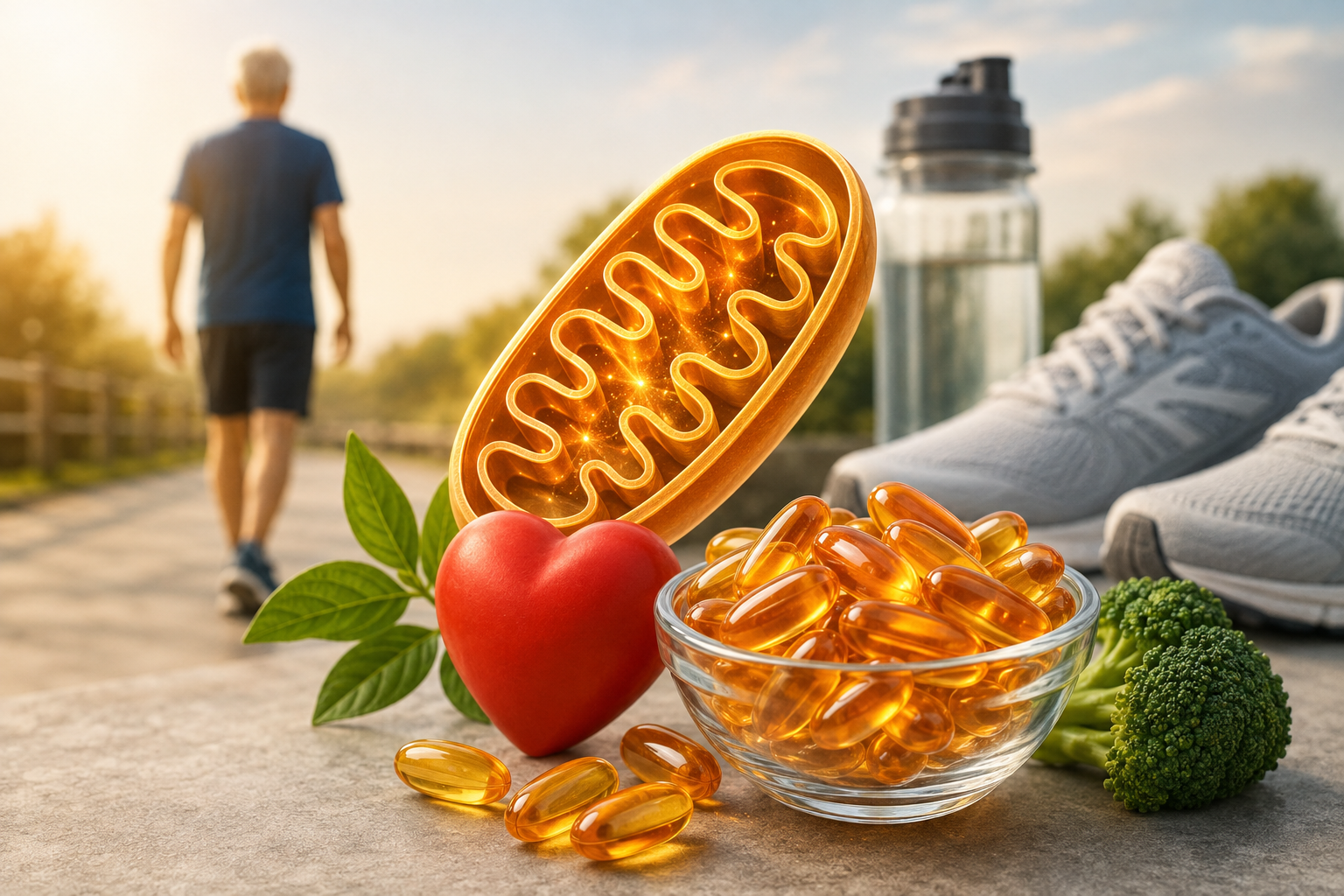
CoQ10 101: your midlife mitochondrial wingman Coenzyme Q10 is made in your body and lives in mitochondrial membranes (in the body’s cells) where energy is produced, acting like a spark plug in the mitochondrial engine. Levels naturally decline with age.
What the science says
Energy support where you need it: CoQ10 plays a central role in mitochondrial ATP production and therefore supports the heart and skeletal muscle.
How to take it for the best results
- Dose and format: 100–200 mg/day is the sweet spot for general cardiovascular support.
- Timing: Take with a meal that contains some healthy fat. Because CoQ10 can feel “energising,” many prefer to take it in the morning or at lunchtime rather than late in the evening.
Why do plant sterols and CoQ10 belong together?
- Different jobs, shared goal: Plant sterols lower LDL by reducing absorption. CoQ10 supports mitochondrial energy. Lowering LDL and improving energy production are a win-win for vascular health.
- Fine-tuning the pairing: Both are fat-soluble and use similar digestive “transport lanes.” There’s no firm evidence of a problem taking them together, but a practical tip is to take your sterols with one main meal and your CoQ10 with another. This approach helps each get VIP access to the absorption queue.
How long until you notice a difference?
It will take a few weeks of daily plant sterol and coenzyme Q10 intake to start showing a difference.
What about food and lifestyle alternatives? A healthy diet still matters most. To lower LDL and support vascular health, consider:
- The “portfolio” approach: more viscous fibre (oats, barley, whole grain wheat), nuts, legumes; each contributes a modest LDL reduction that adds up. And remember to increase your water intake when increasing your fibre intake.
- Oily fish 1–2 times weekly for omega-3s (or consider a fish oil supplement).
- Gentle exercise, such as walking, resistance training, sleep, and stress care, is unglamorous but powerful.
Bottom line: Pairing Woods Health Plant Sterols with Co-Enzyme Q10 is a sensible, evidence-supported strategy. Add a healthy, colourful, varied diet and daily movement, and you have a plan for supporting your body.
Always consult your GP before starting any new supplements, especially if you are on prescription medication or have a medical condition.
References
- Katan MB, et al. (2003) Efficacy and safety of plant stanols and sterols in the management of blood cholesterol levels. Mayo Clinic Proceedings.78:965–978.
- Demonty I, Ras RT, van der Knaap HCM, et al. (2009) Continuous dose–response relationship of the LDL-cholesterol–lowering effect of phytosterol intake. American Journal of Clinical Nutrition.
- Ras RT, Geleijnse JM, Trautwein EA. (2014) LDL-cholesterol-lowering effect of plant sterols and stanols across different dose ranges: a meta-analysis of randomized controlled studies. British Journal of Nutrition.112:214–219.
- Hendriks HFJ, et al. (2003) Safety of long-term consumption of plant sterol esters-enriched spread. European Journal of Clinical Nutrition; 57:681–692.
- Rosenfeldt FL, et al. (2007) Coenzyme Q10 in the treatment of hypertension: a meta-analysis of the clinical trials. Journal of Human Hypertension;21:297–306.
- Qu H, et al. (2018) Effects of coenzyme Q10 on statin-induced myopathy: a meta-analysis of randomized controlled trials. Medicine.
- Marcoff L, Thompson PD. (2007) The role of coenzyme Q10 in statin-associated myopathy: a systematic review. Journal of the American College of Cardiology; 49:2231–2237.
- Littarru GP, Tiano L. (2005) Clinical aspects of coenzyme Q10: An update. Current Opinion in Clinical Nutrition and Metabolic Care;8:641–646.
- Garrido-Maraver J, et al. (2014) Coenzyme Q10 therapy. Molecular Syndromology;5(3–4):187–197.
Publisher: Source link